
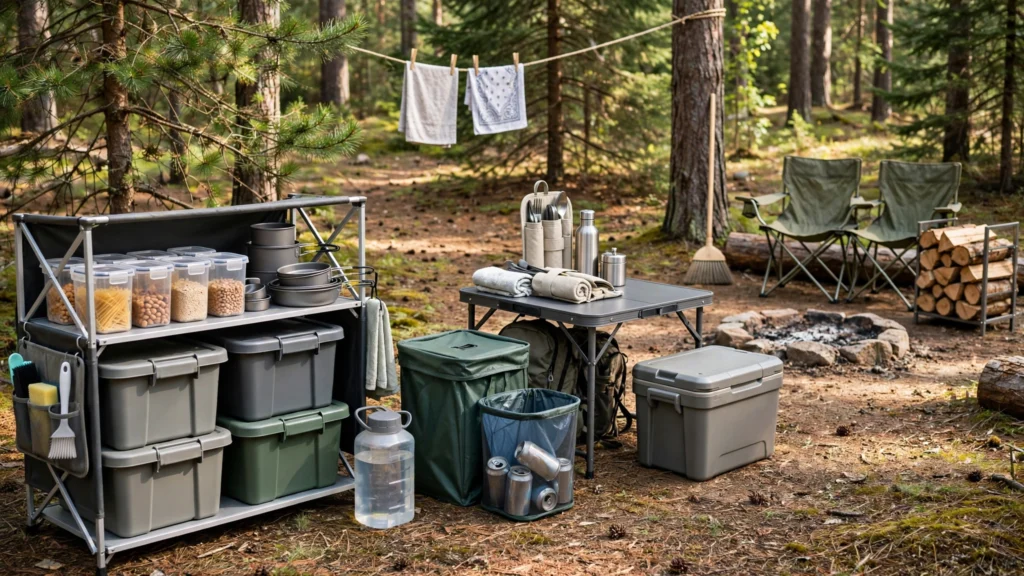
Keeping your Campsite clean and organized improves safety, protects wildlife, and creates a more enjoyable outdoor experience. A well-maintained Campsite reduces the risk of accidents, prevents food contamination, and minimizes environmental damage. According to outdoor recreation experts, simple habits such as proper waste disposal and organized gear storage significantly improve camping comfort. We can enjoy nature responsibly by following proven camping practices that protect both our group and the surrounding environment.
Organization starts before we even arrive. Packing equipment into labeled containers, planning meal storage, and preparing cleaning supplies save valuable time at the Campsite. Experienced campers consistently report that an organized setup reduces stress and allows more time for hiking, fishing, or relaxing. By creating a simple cleaning routine and assigning responsibilities, we keep the area safe, attractive, and environmentally responsible throughout the trip.
Why a Clean Campsite Matters
A clean Campsite protects both people and nature. Food scraps attract animals, including raccoons, bears, rodents, and insects. Wildlife that becomes dependent on human food often develops dangerous behavior, creating risks for campers and animals alike. Proper sanitation also lowers the chance of foodborne illness by keeping cooking and eating areas free from contamination.
Beyond safety, cleanliness improves the overall camping experience. Organized gear reduces time spent searching for equipment and lowers the risk of injuries caused by tripping over loose items. Public campgrounds also rely on visitors to maintain shared spaces. Leaving the area cleaner than we found it supports conservation efforts and helps preserve natural destinations for future visitors.
Benefits of an Organized Campsite
- Reduces wildlife attraction.
- Improves camper safety.
- Prevents food contamination.
- Saves time locating equipment.
- Creates more usable living space.
- Protects the natural environment.
- Makes packing easier when leaving.
Set Up Your Campsite for Easy Organization
Choosing the right layout makes every Campsite easier to manage. Position the tent on level ground away from cooking areas. Store kitchen equipment together and designate separate spaces for sleeping, cooking, eating, and waste disposal. This simple arrangement prevents clutter while improving efficiency throughout the trip.
Use waterproof storage bins for food, cooking supplies, and personal items. Keep frequently used equipment near the tent entrance while storing less-used gear farther away. Experienced outdoor guides recommend maintaining clear walking paths between major areas. This setup reduces accidents, keeps equipment dry, and makes daily activities much more convenient.
Suggested Campsite Layout
| Area | Purpose | Organization Tip |
|---|---|---|
| Tent | Sleeping | Keep shoes outside the entrance. |
| Kitchen | Cooking | Store utensils in one container. |
| Food Storage | Prevent wildlife access | Use sealed containers or lockers. |
| Trash Area | Waste collection | Keep covered trash bags available. |
| Gear Zone | Equipment storage | Stack items by daily use. |
Manage Food and Waste Responsibly
Food storage remains one of the most important responsibilities at any Campsite. Keep all food in airtight containers and never leave meals unattended. In bear country, use designated bear lockers or approved bear-resistant containers. Even small crumbs attract wildlife, making regular cleanup essential after every meal.
Separate trash, recyclables, and compostable waste whenever campground facilities allow. Replace trash bags before they overflow and dispose of waste only in designated containers. Clean cooking surfaces immediately after use and wash dishes with biodegradable soap at approved washing stations. These practices protect water quality while reducing unpleasant odors around the campsite.
Daily Cleaning Checklist
- Pick up food scraps after every meal.
- Wipe tables and cooking surfaces.
- Sweep debris from the tent entrance.
- Store all food before bedtime.
- Empty trash into campground bins.
- Check the area for forgotten items.
Keep Gear Organized Throughout Your Stay
Camping equipment quickly becomes disorganized without daily attention. Return every item to its designated location immediately after use. This habit saves time and prevents valuable gear from becoming damaged or misplaced. Professional outdoor instructors often describe this as one of the easiest ways to improve camping efficiency.
Wet clothing should dry on a clothesline instead of remaining inside the tent. Shoes, backpacks, and tools belong in separate storage areas to prevent dirt from spreading throughout the Campsite. Battery-powered lanterns, flashlights, and first-aid kits should remain accessible in case of emergencies during nighttime hours.
Smart Storage Tips
Group equipment into categories before packing. Label storage bins for cooking, clothing, tools, and personal supplies. Keep emergency items together in one waterproof container. Store frequently used gear near the entrance while placing seasonal or backup equipment farther away. This method keeps the Campsite tidy throughout the trip.
Leave No Trace When Breaking Camp
Cleaning the Campsite before departure demonstrates respect for nature and fellow campers. Walk through the entire area slowly, collecting every piece of trash, food wrapper, and personal item. Inspect fire rings carefully and ensure campfires are completely extinguished with water before leaving.
Outdoor recreation experts strongly support the Leave No Trace principles because they reduce environmental damage across millions of camping visits each year. Restoring disturbed ground, removing all waste, and respecting vegetation help preserve natural landscapes. Leaving a cleaner campsite than we found reflects responsible outdoor ethics and protects recreational spaces for everyone. Explore our latest insights in Best Family Camping Tips for a Stress-Free Holiday.
Conclusion
A clean and organized Campsite improves safety, comfort, and environmental protection. Smart planning, proper food storage, organized gear, and daily cleaning routines create a better camping experience. By following responsible outdoor practices and leaving no trace, we help preserve beautiful camping destinations for future generations while enjoying every adventure with greater confidence.