
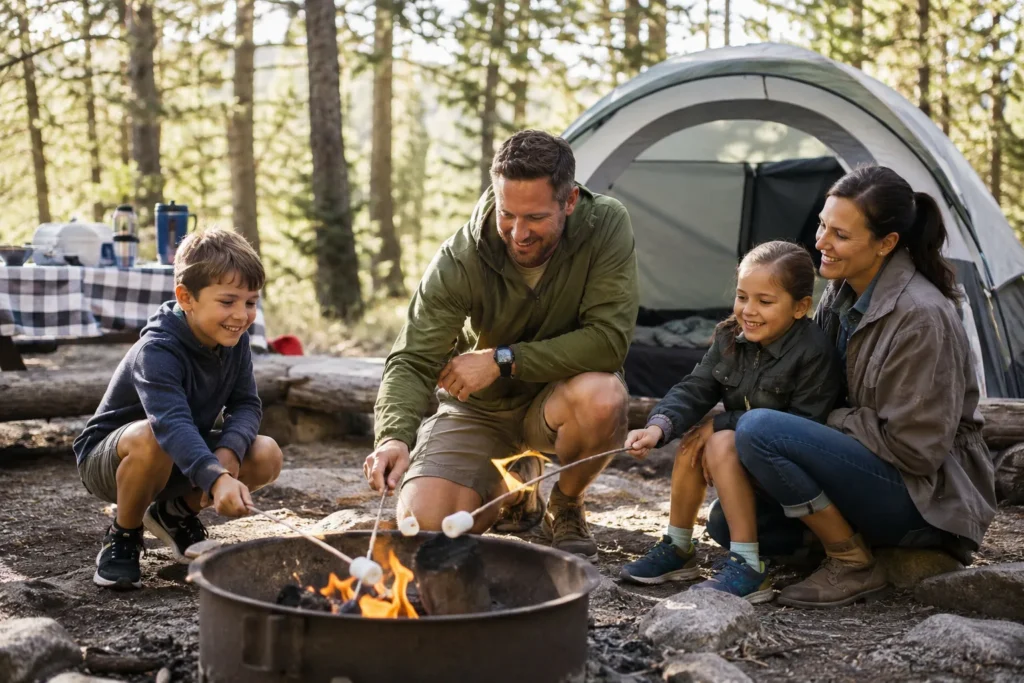
Family Camping creates memorable experiences while helping families reconnect with nature. According to the Outdoor Industry Association, more than 58 million Americans participated in camping activities in 2024. Families continue to choose camping because it offers affordable travel and quality time together. A typical weekend camping trip costs between $150 and $450, depending on the location and equipment used.
Successful Family Camping requires preparation, organization, and realistic expectations. Parents often face challenges involving packing, meal planning, and keeping children entertained. Experienced campers agree that planning ahead reduces stress and prevents common mistakes. We have gathered practical advice, expert insights, and proven strategies to help families enjoy a smooth holiday. Whether it is your first trip or your tenth adventure, the right preparation can turn a simple getaway into an unforgettable experience.
| Family Camping Essentials | Recommended Amount |
|---|---|
| Drinking water | 1 gallon per person daily |
| Sleeping bags | One per camper |
| Flashlights | One per person |
| Meals planned | 3 meals daily |
| First aid kits | 1 complete kit |
| Portable chargers | At least 2 |
Plan Ahead for a Successful Family Camping Trip
Proper planning makes Family Camping easier and more enjoyable. According to Kampgrounds of America, 61% of campers who prepare detailed checklists report fewer problems during their trips. Selecting the destination early gives families time to reserve campsites and review local regulations. National park campsite fees typically range from $20 to $45 per night.
Choose Family-Friendly Campgrounds
Family-friendly campgrounds provide amenities that simplify outdoor living. Many campsites offer playgrounds, restrooms, showers, and picnic areas. Experienced outdoor guide Sarah Mitchell recommends researching weather conditions at least seven days before departure. She explains that understanding temperatures and rainfall patterns helps families pack efficiently. Reviewing campground maps also prevents surprises upon arrival. Good preparation reduces stress and creates a safer experience for children and adults alike.
Pack Smart and Bring Essential Supplies
Smart packing helps avoid unnecessary stress during Family Camping adventures. The American Red Cross advises bringing a fully stocked first aid kit and emergency supplies. Essential items include sleeping bags, insect repellent, sunscreen, lanterns, and rain gear. Families should pack clothing layers because temperatures often change significantly between daytime and nighttime.
Use a Camping Checklist
Using a checklist improves organization and reduces forgotten items. Based on our camping experiences, color-coded storage bins make unpacking easier. Food supplies should remain in waterproof containers to prevent contamination. A family of four typically consumes four gallons of water daily during moderate weather. Portable power banks with capacities above 20,000 mAh provide reliable backup for smartphones and flashlights. Organized packing saves time and prevents unnecessary expenses during the trip.
Essential Items to Bring
- Sleeping bags and pillows.
- First aid kit and medications.
- Portable lanterns and flashlights.
- Sunscreen with SPF 30 or higher.
- Extra clothing and rain jackets.
- Portable chargers and batteries.
- Snacks and drinking water.
Keep Meals Simple and Organized
Meal planning plays a major role in successful Family Camping experiences. The USDA estimates that preparing meals outdoors can reduce vacation food expenses by 35% compared with restaurants. Simple meals save time and allow families to focus on activities rather than cooking. Pre-cut vegetables and marinated meats also reduce preparation time.
Prepare Meals Before Leaving Home
Preparing ingredients before departure creates a smoother experience. Certified nutritionist Emily Carson recommends planning meals with fewer than six ingredients. Her approach minimizes waste and simplifies cleanup. Families often enjoy breakfast burritos, sandwiches, grilled chicken, and fruit salads. Cooler temperatures should remain below 40°F to keep food safe. Labeling containers and organizing meals by day improves efficiency and reduces confusion around mealtimes.
Keep Kids Entertained and Prioritize Safety
Entertainment and safety are equally important during Family Camping trips. Research from Kampgrounds of America found that 72% of children report feeling happier after spending time outdoors. Nature-based activities encourage creativity and strengthen family relationships. Simple games and exploration provide lasting memories without expensive equipment.
Balance Activities With Rest
Balancing active periods with quiet time prevents exhaustion. Families can schedule hiking, fishing, scavenger hunts, and campfire storytelling. We found that children enjoy collecting leaves and identifying birds using nature guides. Experts recommend maintaining familiar sleep schedules whenever possible. Emergency contact information should remain accessible throughout the trip. Teaching children campsite boundaries also improves safety and gives parents peace of mind.
Fun Family Camping Activities
- Nature scavenger hunts.
- Campfire storytelling.
- Fishing and bird watching.
- Board games and card games.
- Stargazing and photography.
- Short hiking adventures.
- Marshmallow roasting sessions.
Expert Advice for Stress-Free Family Camping
Experienced campers emphasize flexibility during Family Camping holidays. Outdoor educator Jason Roberts, who has guided family trips since 2008, believes unrealistic expectations create unnecessary stress. Weather changes and minor inconveniences are normal parts of outdoor adventures. Accepting these situations helps families stay positive.
Parents should involve children in setting up tents and preparing meals. Participation builds confidence and teaches valuable skills. Keeping daily schedules simple allows everyone to relax. Our experience shows that families who focus on togetherness rather than perfection enjoy their trips the most. Creating memories should remain the primary goal of every camping holiday. Start your journey with our guide for experienced campers.
Conclusion
Family Camping offers an affordable way to create meaningful memories while enjoying nature. Careful planning, smart packing, and simple meals reduce stress and improve the overall experience. Safety and entertainment also help children remain engaged throughout the trip. Expert advice consistently highlights flexibility and preparation as the keys to success. By focusing on organization and realistic expectations, families can spend more time enjoying each other and less time worrying about unexpected challenges. A well-planned camping trip becomes an experience that families remember for years.