
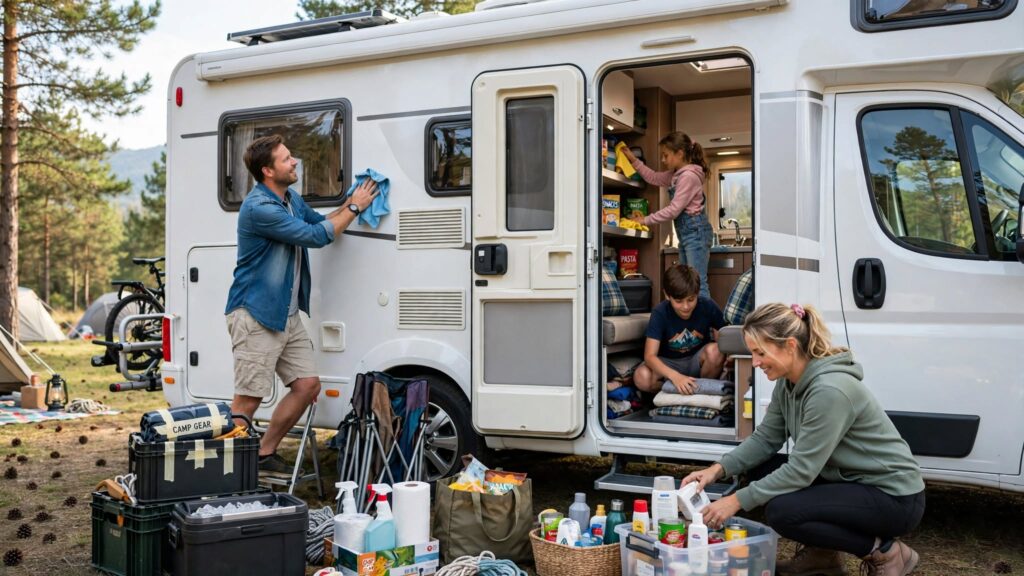
A comfortable motorhome holiday starts well before you arrive at the campsite. Checking the vehicle, organizing your living space, planning essential supplies, and testing onboard systems can prevent small problems from disrupting your trip. Whether you are heading away for a weekend or planning a longer camping holiday, a little preparation makes life on the road much easier.
Preparing your motorhome does not mean filling every cupboard with equipment. The aim is to make sure the vehicle is safe to travel in, practical to live in, and stocked with the things you are likely to use.
Check Your Motorhome Before the Journey
Begin with the basic vehicle checks you would make before any long drive. Motorhomes can spend considerable time parked between trips, so checking them before departure is particularly important.
Inspect the tyres for visible damage, unusual wear, and correct pressure according to the vehicle manufacturer’s guidance. Check the engine oil, coolant, windscreen washer fluid, lights, mirrors, and windscreen wipers. Make sure the fuel level is suitable for your planned route and that warning lights on the dashboard are not being ignored.
It is also worth checking the leisure battery and any other batteries used for onboard equipment. If your motorhome has been stored for a while, test the battery before relying on it at a campsite.
Secure Everything Before Driving
Loose items can quickly become a problem once the motorhome is moving. Plates, pans, food containers, toiletries, and small appliances should be stored securely.
Close cupboards and drawers properly and check that their catches hold. Remove heavy objects from open shelves and place them in lower storage areas where possible. Before setting off, make sure windows, roof vents, exterior lockers, and doors are properly closed.
Test the Water, Gas, and Electrical Systems
A comfortable camping holiday depends heavily on the motorhome’s main living systems. Testing them at home gives you time to deal with faults before departure.
Fill or partially fill the fresh-water system as appropriate for your journey and check taps, pumps, pipes, and connections for leaks. Make sure you understand how to empty the wastewater tank and where its controls are located.
If your motorhome uses gas for cooking, heating, or refrigeration, check the system according to the manufacturer’s instructions. Do not use equipment that appears damaged or has a suspected leak. Electrical hookups, sockets, charging points, and the leisure battery should also be tested before travelling.
Check Everyday Appliances
Turn on the fridge, lights, water pump, heating, and other regularly used equipment. A fridge that worked during your previous trip may not necessarily be ready after months in storage.
Testing these items early also helps you identify anything that needs cleaning, replacing, charging, or servicing.
Organize the Interior for Daily Living
Space inside a motorhome is limited, so thoughtful organization can make a noticeable difference. Store frequently used items where they are easy to reach rather than burying them beneath rarely needed equipment.
Keep cooking equipment together and create separate spaces for food, clothing, toiletries, and outdoor gear. Small storage boxes can stop loose objects from moving around and make cupboards easier to manage.
Good organization should continue after you reach your destination. Simple habits from How to Keep Your Campsite Clean and Organized can also help prevent clutter from spreading between your motorhome and outdoor camping area.
Avoid packing every available storage compartment. Leaving some free space makes it easier to put things away during the holiday and reduces the temptation to leave bags and equipment on seats or floors.
Pack for Comfort Without Overloading
Motorhome packing requires a balance between convenience and weight. Bringing too much can make storage difficult and may contribute to exceeding the vehicle’s permitted weight limits.
Start with practical essentials such as suitable bedding, towels, weather-appropriate clothing, basic cookware, food storage containers, toiletries, cleaning supplies, and any personal medication you require.
For outdoor living, you may want folding chairs, a small table, suitable footwear, and lighting for use around your pitch. Pack according to the campsite and expected conditions rather than bringing equipment simply because there is room for it.
Remember that passengers, water, fuel, food, bicycles, camping furniture, and personal belongings all contribute to the load carried by the motorhome.
Prepare the Kitchen for Simple Meals
A well-organized motorhome kitchen can make mealtimes much less complicated. Plan a few straightforward meals before leaving so you know which ingredients and cooking equipment you actually need.
Choose ingredients that can be used across several meals and store dry food in secure containers. Keep frequently used items such as mugs, plates, utensils, and pans within easy reach.
Check your fridge before departure and clean out anything left from an earlier trip. If you are carrying chilled food, make sure the fridge is operating correctly before loading it.
Make Sleeping and Seating Areas Comfortable
Good sleep can have a major effect on how enjoyable a camping holiday feels. Check mattresses, cushions, bedding, blinds, and ventilation before travelling.
Bring bedding suited to the expected temperature rather than assuming the motorhome heating will always be needed or available. If beds are created by converting seats, practise setting them up before the trip, especially if the motorhome is new to you.
Ventilation also matters. Learn how your roof vents and windows operate while still maintaining the security and ventilation requirements specified for your vehicle.
Prepare for Arrival at the Campsite
Keep the equipment needed when you first arrive somewhere accessible. You do not want levelling equipment, electrical hookup gear, or outdoor footwear buried underneath luggage.
Before leaving home, check your campsite information for facilities and pitch requirements. Knowing whether your pitch includes an electrical connection, water access, or waste facilities can help you avoid carrying unnecessary equipment.
It is also useful to keep essential documents and travel information together, including driving documents, campsite booking details, vehicle information, and any relevant breakdown or insurance details.
Do a Final Walk-Around
Just before departure, walk around the entire motorhome. Check doors, lockers, windows, roof vents, steps, cables, and anything mounted externally. Inside, confirm that cupboards are closed and loose belongings are secured.
A final check only takes a short time, but it can catch the small things that are easy to overlook while packing.
Conclusion
Preparing your motorhome for a comfortable camping holiday is mainly about making the vehicle ready for both driving and living. Check the mechanical basics, test water and electrical systems, secure your belongings, organize the interior, and pack according to what you will genuinely use.
Once those essentials are handled, arriving at your campsite becomes simpler. Instead of sorting out forgotten equipment or unexpected problems, you can settle into your pitch and start enjoying the trip.