
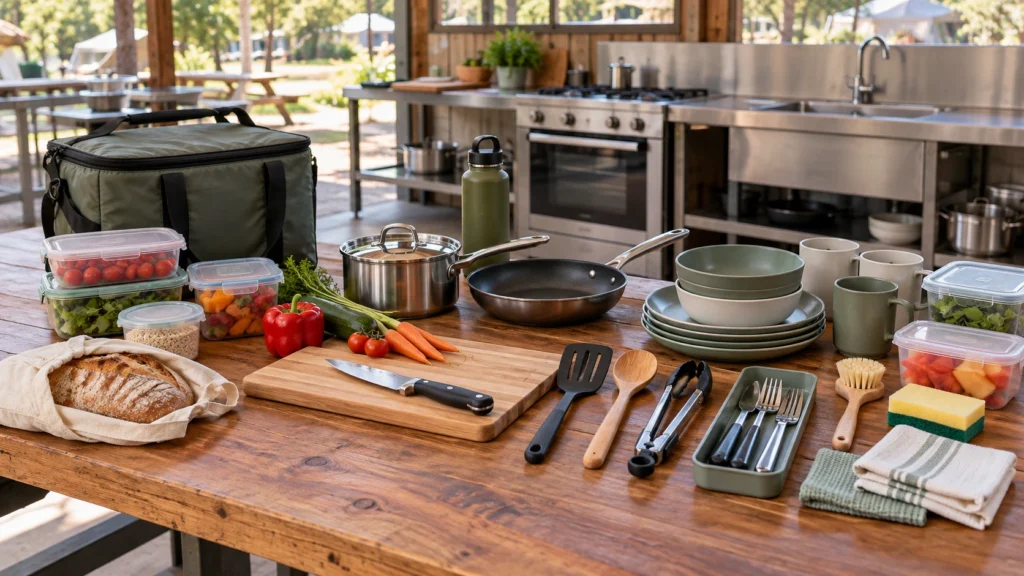
A shared campsite kitchen can make meals easier, but it does not remove the need to pack thoughtfully. You may have access to an oven and work surfaces while still needing your own knife, containers, and cleaning supplies. A practical packing list for shared camping cooking facilities starts with the meals you expect to make, then covers how you will carry ingredients in, cook, eat, and leave the space ready for the next person.
Check the kitchen before filling your bag
Facilities differ between campsites, and access may change with the season. A campsite, for example, may state that its guest kitchen is open daily during the school summer holiday and list ovens among its facilities. Anyone planning to cook there outside that period should check availability before relying on the kitchen. It is also sensible to confirm which utensils and appliances are provided, since access to an oven does not tell you what cookware is available.
Think through your first meal before packing. If you intend to bake a tray of vegetables, you will need a suitable tray unless the campsite confirms one is supplied. If your plan is sandwiches and fruit, a knife, board and storage containers may be enough. Choosing a few straightforward meals keeps your bag manageable and reduces the time you need in a shared space.
The cooking kit worth bringing
Pack items that support several meals instead of a separate tool for every recipe. Depending on what the kitchen provides, a useful core kit may include:
- A small sharp knife and a cutting board: Keep the knife protected while carrying it. A compact board gives you a reliable surface for preparing food.
- A saucepan or frying pan with a lid: Choose cookware that suits the appliances you have confirmed are available. A lid helps with simple dishes such as pasta, rice, or reheated meals.
- A spatula or cooking spoon: One versatile utensil is usually more useful than a crowded bundle of tools.
- An oven tray or dish: Bring one if you plan to use an oven and have not confirmed that a suitable dish is supplied.
- A heatproof grip or oven mitt: Hot handles and oven dishes are awkward to move safely with an ordinary tea towel.
A small container or pouch keeps loose utensils together on the walk between your pitch and the kitchen. Before leaving home, check that your pot fits inside the bag and that its lid is packed too. These mundane details are easy to overlook when kitchen equipment is spread across several camping boxes.
Pack for eating and storing food
Each person needs a plate or bowl, cutlery, and a cup. Reusable items that are sturdy and easy to wash tend to work well for camping. If you are travelling with children, familiar cups and smaller bowls can make serving meals simpler without adding much bulk.
Food storage deserves as much attention as cooking gear. Bring sealed containers for opened ingredients and leftovers, plus a bag or box for carrying food to the kitchen. Label anything you may place in a shared refrigerator, and check the site’s rules before assuming refrigerator space is available. If chilled storage is uncertain, plan meals around ingredients you can keep safely with the equipment you have.
For instance, a family arriving late might bring bread, whole fruit, and the ingredients for a simple breakfast, then shop for fresh dinner ingredients the next day. That avoids depending on an unfamiliar kitchen or storage arrangement immediately after arrival. At some campsites, a grocery store is located nearby, which can make buying a forgotten ingredient easier during a stay. Its presence is useful, but it does not replace checking what you need for your first meal.
Cleaning supplies are part of the kit
Shared cooking works best when each group can clear its space promptly. Pack a sponge or dish brush, a small amount of washing-up liquid and a clean tea towel or drying cloth. A separate cloth for wiping surfaces helps avoid using the same one for dishes and counters. Bring bags for carrying rubbish to the designated disposal point, and follow the campsite’s sorting arrangements.
A shallow tub can be handy for transporting dirty dishes, particularly if your pitch is some distance from the kitchen. It also gives small items a place to sit while you wash up. Let equipment dry before sealing it in a bag for a long period; damp cloths and containers are unpleasant to unpack at the next meal.
Keep raw ingredients separate from ready-to-eat food during preparation, and wash the knife and board between those tasks. In a busy guest kitchen, cleaning as you go also frees up counter space. Return borrowed equipment where you found it, and take your own food and utensils when you leave. For more detailed information on this topic, read our guide on Common Mistakes When Using Campsite Access Cards.
Make shared space easier to use
A little preparation at your pitch can shorten your time at the counter. Decide what you are making, gather every ingredient, and carry the full kit in one trip. Where appropriate, measure dry ingredients or wash produce beforehand. Keep your belongings in your own area rather than spreading them across several work surfaces.
Suppose two groups want the oven at roughly the same time. A meal that needs a long bake may delay dinner, while a pan meal or a dish assembled in advance may be easier to fit around others. Having one flexible alternative in mind is more useful than packing extra gadgets for every possibility. Check local guidance before using any outdoor cooking equipment or grilling area, since the arrangements for those spaces can differ from the guest kitchen.
Before departure, run through one final sequence: ingredients, cooking tools, plates and cups, storage, then washing-up supplies. Adjust that list to the facilities confirmed for your dates and the meals you will actually make. The best shared-kitchen kit is complete enough to let you prepare and clear a meal without filling your camping luggage with equipment you never use.